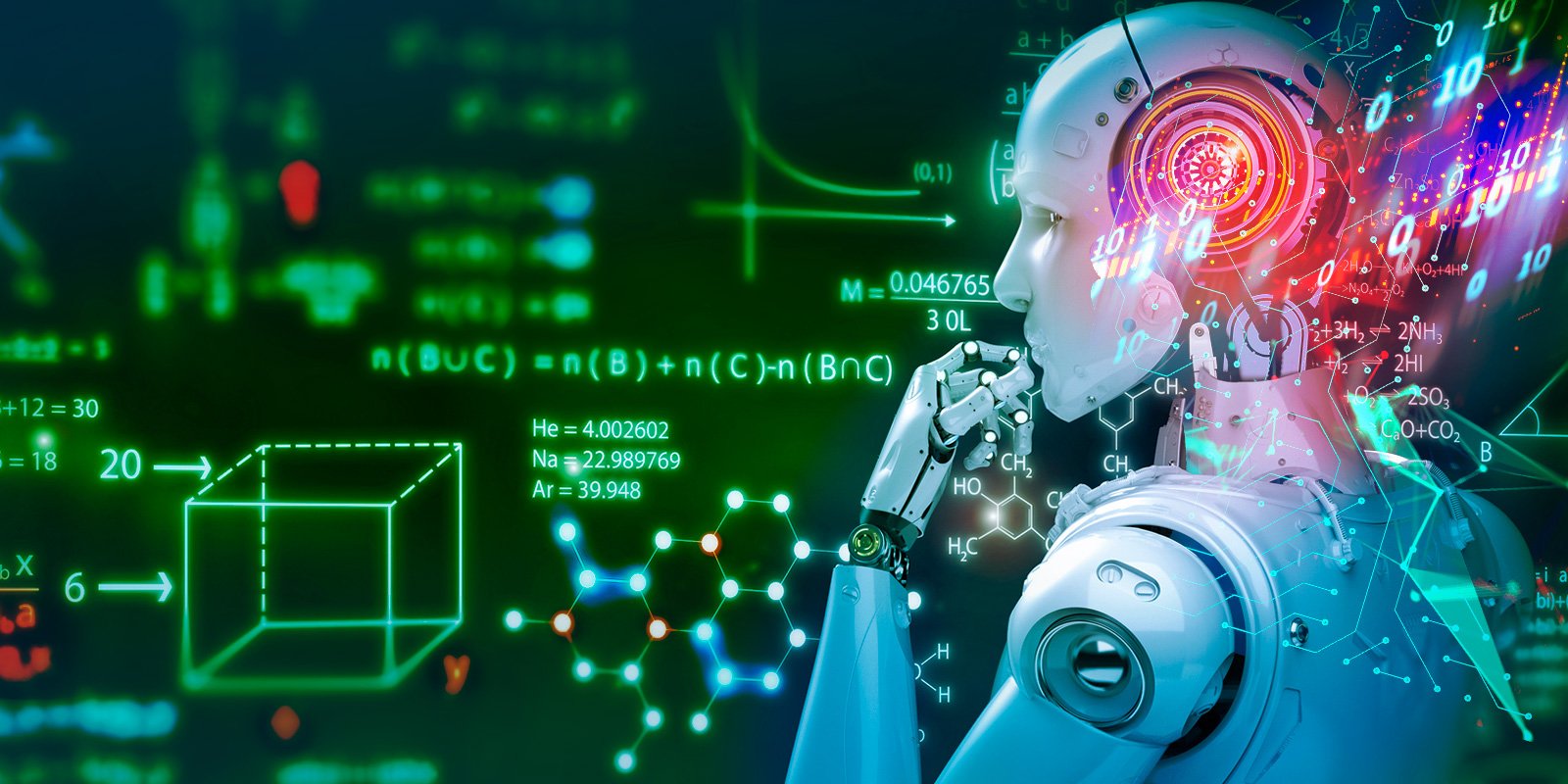
In the science fiction universe of Star Trek, in the 2370’s, the possibility of a holographic, misleadingly shrewd doctor was created to give momentary progressed clinical help during crises in “sickbay”. This was even to the degree of in a real sense supplanting the stars hip’s clinical official. However, even in the science fiction world, the idea was questionable. For a “less human” personality, the name “Holo-Doc” was supplanted by Starfleet order for the Emergency Medical Holographic Program (EMH)— not exceptionally innovative as I would see it; not at all like how organizations are now naming their advanced specialists today. By 2377, there had been four renditions of the EMH, assigned Mark I, II, III, and IV. The specialist, an Emergency Medical Hologram Mark I, served on the Star Trek: Voyager. Possibly you have seen him with his somewhat irritating character and problematic bedside way (a programming issue by the maker).
Was there protection from the EMH in Starfleet?
Hell better believe it. Opposing the EMH, notwithstanding, was in a real sense ‘worthless.’ Nonetheless, some “organic” Starfleet specialists genuinely protested the utilization of the EMH. The recognizable (and human), Doctor Beverly Crusher, herself swore that she could never utilize one. In any case, she had to do as such to make an interruption while the Borg (underhanded adversary) attempted to acclimatize (annihilate) the USS Enterprise, permitting her, the clinical staff, and significantly, their patients to get away. Yippee for the EMH and ascent of the medical care supplier.
Presently consider this. The “specialist,” a Mark I serving on the USS Voyager, ran consistently for quite a long time and had to extend his programming widely to keep up. Envision every one of those insane new outsider sicknesses and living things and new headways in medication? Presently, the EMH itself at first protested being the trade for the whole clinical staff. All things considered, the EMH program was just intended to work for around 62 days (1500 hours) after which, memory debasement would happen. Luckily, with the assistance of “his” partners, some programming work was done to conquer this issue. Computer based intelligence doesn’t rest or take get-away, coincidentally.
OK, I am a “Nerd,” yet Starfleet to the side, I have additionally been engaged with probably the coolest stuff including AI and Healthcare. Is opposition “pointless”? All things considered, in word, yes! Accepting AI and mechanization in medical services is definitely not a decision for a large group of reasons.
An Aging Population and a Clinical Shortage Drive The Case For Change
Actually we have a clinical lack, our populace is maturing, we have more information, and clinical disclosures are expanding at a speed that is difficult to stay aware of for any clinician. Consistently, over the most recent year and a half, there are scores of clinical diaries with such countless new discoveries. A doctor expert as of late commented that in one strength alone, there are 800 clinical diary articles with progressions in the field, which is unmanageable. I consider back my number one unique scenes of Star Trek when the human specialist McCoy (no AI specialists on-board the principal Enterprise) was confronted with mending another types of life. Disappointed by his absence of information the great specialist otherwise known as “Bones” shouts “Hell, Jim (Captain Kirk) I’m a specialist, not a bricklayer!”
Interestingly, in 2020, we have more individuals beyond 65 5 years old than under 5. We are running out of individuals to deal with a more seasoned populace. Like the distant tasks of profound space and sickbay, how would we support provincial and metropolitan networks when we have a particularly critical lack of clinicians who are in danger of a high pace of wear out? Review, even in the science fiction world, the “holo-doc” whined of burnout. What’s going on today to our medical care experts?
Adjusting Technology and Human Elements
All in all, does the entirety of this mean supplanting the specialist? All things considered, it didn’t occur in Star Trek. Why? There is a whole other world to the specialist’s work than simply demonstrative thinking. Regardless of whether we are in that science fiction universe of 2370 or today, we know a test and opportunity is the correct equilibrium of innovation and human components. Indeed, even in the science fiction universe of the 2300’s, specialists had not been supplanted. The work of a clinician is convoluted, requiring a great deal of area information, and it is a basic occupation that incorporates tending to sympathy, inclinations, and a scope of alternatives just as a human touch. Then again, actually none of us realize every one of the things expected to really focus on a patient. Care is furnished by a group with the aptitude to accommodate a patient in a specific setting and circumstance with a consideration venture that is mind boggling enough without being interstellar (that is coming soon enough). No, we are not prepared to supplant clinicians, nor should we. Basic medical services conveyance is extreme as it includes wellbeing – life-demise outcomes. It is as of now testing. In this way, we extend that group with AI and present day information as resources for doctors and clinical groups. We raise advanced labourers and incorporate AI reconciliation into work processes to facilitate specialists’ and tasks’ weights. Enlarge the clinical group? Indeed.
Think about expanded insight and guided diagnostics. Computer based intelligence can utilize profound figuring out how to filter through large number of patient records and results to analyse sicknesses and suggest therapy plans.
Psychological processing in Healthcare
Psychological processing in medical care will progressively turn into the standard. Specialists will in any case give sympathetic, human-focused consideration, however clinical AI will play out a portion of medical services’ more unremarkable undertakings; which is all well and good.
Consider if your PCP had treated 60,000 patients? Wouldn’t she be far and away superior at perceiving the indications of a sickness? Her tremendous experience would make her phenomenally educated about which medicines lead to the best results. Today, in Ophthalmology, AI improves work at distinguishing diabetic retinopathy than human specialists. A comparable story is valid for melanoma and dermatologist, where the neural organization is as or more compelling. GE Healthcare’s shrewd X-beam does as great of a task at diagnosing a fell lung as a radiologist (before the picture gets perused). The calculations perform well.
Hope to see more AI in both the arrangement of care and organization. Suppliers can utilize AI and chatbots to give more effective consideration, a superior encounter, more educated choices by the consideration supplier, care group, and care coordination. Conversational visit is practically human and is–digging in for the long haul. As of now, there are models where chatbot fulfillment in follow up oncology care is 90% percent and patient commitment at 80%.
Shrewd chatbots will progressively do the positions of giving warnings, addressing wellbeing related inquiries, and keeping patients refreshed on their wellbeing. Actually like in Starfleet, the “EMH’s will be accessible if the need arises day and night, prepared to answer the call. Accomplishing more direct undertakings, client assistance chatbots will let loose their human partners to deal with more mind boggling and time-concentrated requests yet in addition increment inclusion and access.
Simulated intelligence Enables Better Care
For suppliers, AI can help expand the consideration being given by minding how patients are getting along any place they are in their excursion: planning for, recuperating from, method. This as of now implies foreseeing high readmission, for example, with cardiovascular breakdown, in any event, anticipating readmit at release so the clinical group can act to diminish this occasion before it occurs. Dangers for contamination like sepsis can be distinguished, and subsequent to leaving the clinic, help the consideration group oversee continuous issues. By giving more top to bottom understanding and utilizing information from EHR, cases and social determinants of wellbeing (where individuals live, shop, and eat; who they live with, and so on – not simply clinical information in EHR), the consideration group can give assistance the hardest pieces of care. The consideration group can change patient conduct, survey the danger, and alleviate the danger in an ideal way. Suppliers can likewise focus on by zeroing in more adequately on explicit populaces like a basic 200 versus 11,000 patients for readmission. Care groups can likewise accomplish a superior mutual perspective of what is new with a patient to decrease variety in care. At that point, we likewise have the requests for customized medication, which truly will require AI. With regards to hereditary qualities, hereditary testing, and essential consideration, the cutting edge is to some degree lost in an ocean of new innovations and progressions. Artificial intelligence can help do a superior of occupation engaging what the essential consideration doctor – from tele genetics, telemedicine to test choice and preparing. From a payer viewpoint, AI can help distinguish those patients not prone to close the consideration hole as represented by HEDIS measures. Care administrators can focus on the correct effort for preventive wellbeing tests.
Strikingly accepting new advances
Overall, this is an excessively energizing time as we “strongly go where nobody has gone previously” later on for medication and medical care. There are numerous clinical, specialized and moral difficulties ahead. We should forcefully deliver morals and standards to look after trust, patient security. Trust is central. We should have the option to believe information utilized for AI (follow genealogy and information from a confided in source, and brighten the “black box” for reproducibility as wellbeing and trust instruments) and guarantee to monitor for predisposition.
The ascent of the computerized medical services labourer is here
While clinicians will always still provide compassionate, human-cantered care, medical AI will perform some of the healthcare’s more mundane tasks and help clinical and operations teams manage their increasingly complex tasks while removing unneeded waste and friction – while also relieving some pressure from our healthcare workforce. Importantly, creating medical intelligence requires getting clinicians involved in healthcare’s AI transformation. We need to be smart about how we delegate things computers are better at doing. Let’s make sure not to program our holo-doc with some of those same annoying personality characteristics as the doctor of Voyager. Will we name the holo-doc more cleverly than Starfleet’s EMH? I hope. Like all new technological developments, there are unintended consequences. We will need to continue to balance technology and the human element carefully. And, let’s face it. The healthcare industry is also an opportunity rich when it comes to faster, better, cheaper ways of doing things operationally. I mean, even at home, I no longer have to get out of bed to turn off the lights or lock my front door.
Regardless of the technology, we’re caring for people
AI including voice and NLP and new mobile tech like 5G promises to make healthcare more affordable, more accessible, and more effective for all: better outcomes, better experience, and more access. We can’t forget what it means to be human with all the tech—and what it means to care for people; holo-doc or no.